
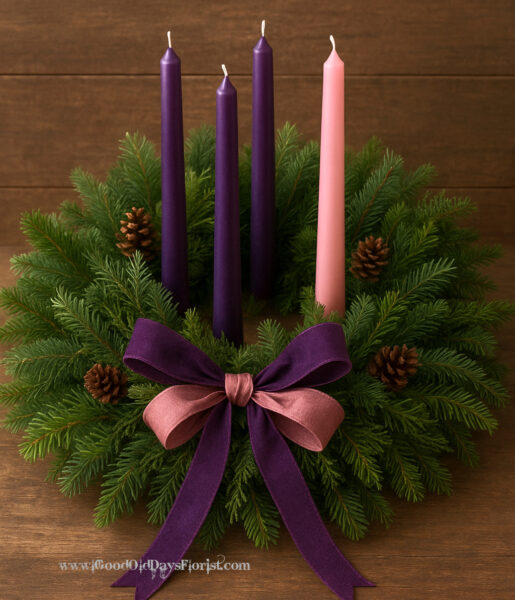
Historically, ancient European cultures also made candled wreaths to give hope & brightness during the dark winter months at the winter solstice. Credit is given to an 1839 German school professor for the modern-day Advent wreath by taking a wagon wheel with 24 candles and 4 white for the Advent weekends to help the children count down the days. This eventually was adopted into a symbolism of more reverence in Europe & America to mean the coming of our light meaning Jesus, with just 4 candles surrounded by a circle of evergreens. The evergreens for their longevity (his never ending love) the 3 purple candles for hope, penance, and peace, while the pink for joy.
Not unlike many Indigenous peoples of the Americas and First Nations, who have no Advent custom but they do have winter solstice beliefs. In simple terms, the winter was a time to rest and reflect, visit with family, story tell and pray to the Creator for the coming spring sun. Burning various herbs including sage, cedar, and sweetgrass as they prayed. They also believe in all things round as to the circle of life/seasons, or Medicine Wheel. The various tribes each had their own customs but still were associated with the coming of light and warmth given by the Creator, Great Spirit.
I think these customs are as different as they are quite similar, just with changes to locale. Everywhere there are seasons; winter (resting time) and spring (coming to life). The candle meaning of hope, penance, peace, and joy is a mantra worldwide.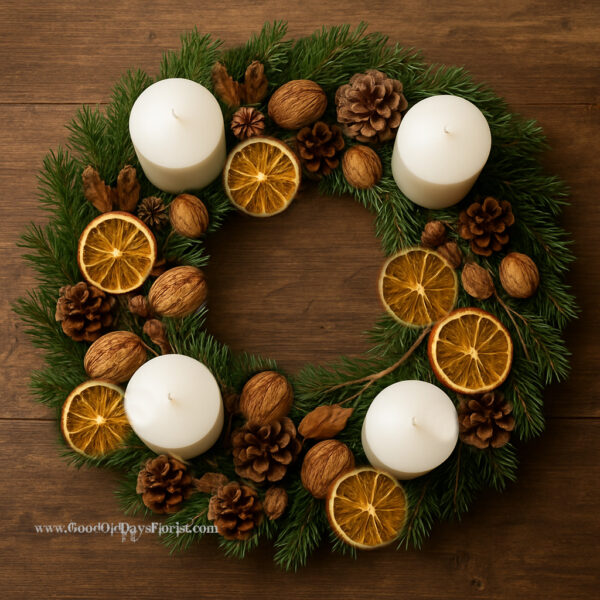
If you don’t participate in the traditional Advent season, maybe a nice idea would be to still place a simple wreath with 4 candles of any color to light each weekend, added dried fruits, nuts, and offerings of the last season. For a Native addition, add feathers, braided sweetgrass, and dried herbs. I think the universal message is to be reflective of the year past and hopeful for the future with prayers & wishes for peace and joy at Decembers end. A wreath for all. 🙂