

Green Floristry Preface:
Before reading below I wish you to know that art & design are my passion and I continually encourage, promote, and delight in organic creativity of all forms. I also, truly love my business and proudly advocate for small, American, independent, proprietors. However, my heart is and always will be, with the environment first and its preservation.
◊
Upon learning the darker side of my industry; I realized almost every aspect that I truly care about above and then some, has been compromised and in jeopardy. The choice of easily switching careers or tackling my industry and big corporations on a daily basis was frightening and a very difficult call for me, but in the past few years I have successfully transformed my florist to one of patriotism with an eco mind; the first of its kind-and I am not stopping.
◊
Being green is a continuous task requiring what I call a “dedicated dedication” with a tenacious curiosity. My career path now includes education and activism for both other florists and those aspiring to be one, and awareness to you the flower buyers of the options and alternatives we absolutely need to think about and implement as nothing gets results faster than using your spending habits.
◊
I travel to both our NY Legislature and Washington Congress to lobby my cases, but you the American consumer have the real power to bring about change and upon reading below, I hope you appreciate my choice to expose these issues and make a stand to help me and all of us.
Lynn
Green Floristry-What It Is-Why We Need It
Green floristry is:
- A traditional florist but with an environmental mind
- Using eco-organic goods and product
- Offering US grown flowers and botanicals.
- Lessening environmental impact of product toxicity
- Energy & water recycle and reuse
Green floristry is the main aspect of operating a sustainable, earth friendly, and natural flower shop.
The word green is overused and confused. So what is green anyway? Understand it straight here- once and for all!
One would think florist and nature go hand in hand, but unfortunately they do not. The florist of today is not even the lightest shade of green of long ago; contributing no less to the environment than any manufacturing enterprise. In reality, it is about as far from being natural as a chemical plant. Commercial floristry wears only a mask of nature and is not earth, human, or animal friendly- nor politically fair.
The Biggest Shames
Since the 1950’s, the florist has been “modernized” and infiltrated with new innovations to save time and money in what is a labor intensive endeavor dependent on nature. Harnessing and attempting to control nature seems a forever, human, quest and these new innovations engulf the floral industry in the form of non biodegradable compounds, non reusable components, environmental degradation, and toxic chemicals such as:
* Formaldehyde and resin foams
*petroleum & synthetic based ribbons, candles, tapes, balloons, and containers
* plastic everything
And of course…
*manufactured & chemical laden flowers & plants
The Flower Lovers Friend-Toxic Floral Foams
100 years ago, floral designers were nothing short of ingenious using all sort of twig, wire, pebble and moss for their design mechanics. And the designs were just breathtaking.
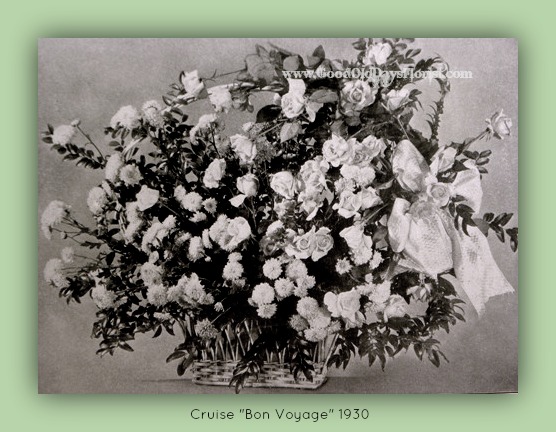
Today comparatively, the publicized designs offered everywhere are cheap & mediocre at best using the arranging foam. This wonder foam enabled mid century designers to create the above 2 hour basket in 30 or so minutes; saving alot of time and money. However, the cost in actuality is huge. This arranging foam is only good for a 1 time use. It is composed of a thermoset plastic with highly toxic, carcinogens including formaldehyde, barium sulfates, heptanes and dye.
The Material Safety Data Sheet* states:
*it never biodegrades and should be disposed of and/or recycled properly.
*it is made of documented, cancer causing, agents and warns of such.
And worse further,
*any who handle it are advised to wear mask, goggle, and impervious gloves.
Side Note: Odd, in my years in business, and 100’s of boxes of foam we previously purchased; never has or is there still, any warning label nor any disposal/recycling instruction or manufacturer initiative on the boxes and formed pieces. When I first found this data, I was astounded and then incised. How could something like this have no restriction or regulation? How could the makers have no care to at least put a warning label? And why don’t they have a reclamation/recycle program? How has this quietly, slipped through the cracks of regulation with no awareness? I will stand up and say why-it’s about money as always……
The Convenient Supplies-Made/ Sprayed Just For Us
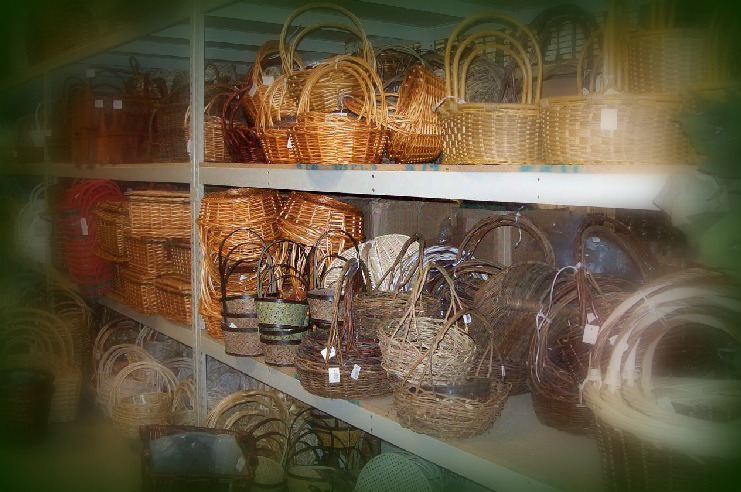
Ribbons, baskets, bowls, decorative accessories and more abound in all florists and gift stores. Every color, every shape, and every style. All manufactured in the same manner, in the same countries, with a hoard of chemical and social issues. The ribbons are of acetate and petroleum, the containers are the farthest from earth friendly, and the baskets are made of natural materials gathered from protected or unknown sources; unnaturally varnished & painted.
From my experience and research; I found over 90% of everything sold in gift, department, and big box stores, and florists is imported from factories (and villages) in Island and Asian countries with minimal to largely, no labor or chemical regulations. Less than 10% of floral accessories are made in the United States, at best 5% are recyclable if it is done, and less than 1% are earth friendly much less biodegradable.
Side note: After inquiring and speaking with several shipyard handlers, I was educated even further on the shipping carton, procedures of all products entering the United States at our docks. I was not aware of the ‘required’ spraying of insecticides and rodent poisons to the big, shipping cartons, including clothing. Upon arrival, they are fumigated and then sent to retail markets. Just as our grandparents always told us to do, wash your new clothes…and this has been going on for over 60 years.
Love Those Plastics-Cheap &Plentiful
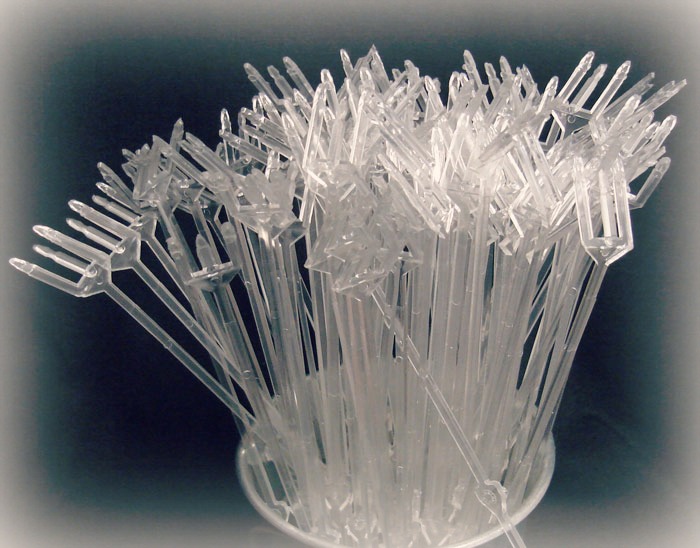
As we know, plastics were the innovation of the century. Cheap, easy to make, and light weight. Every toy, bag, toothbrush, water bottle, and beyond are made of it including the multitude of floral containers and accessories. The chemical makeup list is unending :
Bisphenol, polyvinylchloride (PVC), polyethylene (PET), polypropylene, styrene, triclosan, phthalates, dioxin, and, and, and it goes on. Toxic and never biodegrading.
The havoc on the planet and its inhabitants from plastic is horrific and the florist is not excluded from this contribution. From the everyday uses of wrappings, ribbons, balloons, card holders and plant liners; to arrangement bowls, sympathy backings, styrofoam, plastic pots, and everything else-we are inundated. And again, nearly all are imported. These cheap imports create a lack of respect for a product and encourage one time use with easy and perpetual replacement.
Side Note: We do have a few US companies making a half dozen or so floral items from recycled plastics-which is commendable-but of course, that only works if we in turn recycle again.
Fresh Flowers- Don’t Touch Don’t Sniff-Composting Forbidden

Beautiful, fresh, aromatic flowers. The reason for a florist to be and all of your happiness.
When outside interests decided to enter the cut flower market, the demand for plentiful, cheap flowers required vast land in a year round temperate climate beyond California and the southern states- out of the US. This also means the natural growing process must be altered to one of ‘manufactured’ flowers-just like our food and everything else. And it has.
There are no small fields of happy flowers any more than we have fields of happy cows. The only way to grow massive, inexpensive, out of season flowers is with political help, heavy chemical enhancement, low wage workers, and no environmental dictates. From rain forest areas to mountain lands; huge agri farms have been carved out just to propagate flowers-just like it has for corn, soy, and genetically modified crops. (see about GMO’s) Which is an inevitable as our population rises, but the destructive practices and chemical use negates any possibility of a sustainable relationship within or alongside any diverse ecosystem. They were used up, while pushing out the indigenous vegetation and wildlife.
According to all industry sources and advertising; 85%+ of cut flowers sold in the US are now “proudly” grown out of the country-mainly in Latin & South America and beyond; with the newest increase in African grown. Out of the country (excepting Holland where unions offer a bit more protection), chemical regulations are below to nonexistent the standards in the US, as are environmental and human regulations which equates to more profit.
Coupled with the tremendous amount of packaging and fuel it takes to get them 2000 miles to the US; it is far from sustainable. To add further fuel to the fire we have politics involved and fair trade comes into play. A deal was made for duty free status on flowers from various South American countries in trade for assistance with the drug trade. Flowers are one the only duty free products in the US; and as of now, it is a renewed status with this year a great push to make them forever duty free. Goodbye even more American farms.
These 100’s of chemicals include various pesticides, fungicides, insecticides, and herbicides. These same chemicals such as methyl bromide and DDT have long been banned in the US by the World Health Organization. Known carcinogens toxic to humans, pets, and the land; and toxic also… to the poorly paid farm workers and their land.. Don’t ever think you are doing right by tossing them in your garden compost.
Florists are further ‘pushed’ and advised to use all the various preservatives and enhancement chemicals prescribed from the growing stage to you; used to aid the flowers or help all sort of malady from wilting to bacteria. Then more again, to help with the long distance travel, for head drooping, for the floral foam, for sterilization of buckets, and again it goes on. So we have chemicals used for the germination stage-growing stage-the shipping stage-the florist’s stage-and the consumer stage. A chain of way too many unnecessary, chemicals going in the drain, landfill, our water, and then to ourselves. We again are paying dearly to ourselves and the planet for inexpensive, mass marketed flowers-wouldn’t you agree?
Side Note: Every year another ‘new’ chemical is introduced for the florist. Processing the flowers with all the recommended chemicals just at this stage is enough of a cocktail to surprise anyone and can be as expensive as the flowers themselves. I believe them just another pretense for profit .
Check our Flower Politics Page for the political issue.
Paraffin-The Must Have Favorite Wedding & Party Guest
There are always a choice, few guests that are invited to an event to guarantee its success. From my seat, these guests mean paraffin. Candles, balloons, and floral tape. An odd trio, but always present at all events and overlooked as to their environmental impact.
Candles ..are made from paraffin, a slushy, petroleum byproduct that is bleached and combined with acrolyn to form the solid block we are familiar with for candle making and canning. Additional chemicals are then added for burn time, color, texture, appearance, and of course scent. Nothing natural, nothing safe. As a candle burns the paraffin releases these toxic chemicals including benzene and toluene-the same toxins in diesel fuel. Nothing natural or healthy and 1000’s are burned at weddings, parties, events, and in our homes. A typical catering hall will go through 100’s of votive candles in just one weekend of events, and that is just votives.
Side note: Paraffin is used in every candle made and candle crafting. Soy, beeswax, and palm oil are safe & healthy alternatives but then as we know, they come at a dear price to the wallet, and more so to our natural resources as each have their own environmental issue.
◊
Banned Balloons
Rubber balloons began from the sap of the Malaysian rubber tree. To make a balloon from the sap; curing agents, accelerators, coagulants, oil, nitrate, and dyes are added. Today most balloons are made in China using synthetic rubber which is made from heated petroleum which creates polymers that ironically, resist weathering and biodegrability. In reality, it is a misconception and false promise from the balloon industry. They will not biodegrade-yes they will break down eventually into small bits taking a valise of chemicals with them into the ground.
The shiny, foil balloons are made of an equally worse recipe. They are nothing more than another thermoplastic polymer of nylon and polyethylene (PET) on one side and metalized with aluminum on the other. Since they contain metal they will conduct electricity. Thus, they should never be released outdoors to be tangled with power lines as they can cause major power outages. They of course are not earth friendly in composition or use, and are currently outlawed in California.
Side Note: Unknown to most balloon buyers is that quality, foil balloons can be refilled and therefore regifted. Because of this, we include them in our Recycle Program and encourage you to bring them in for refilling.
◊
Helium-Up Up And Away
Ironically, the one aspect of balloons you would think has issues is helium. However, it is a natural occurring substance accumulating as a by-product of the earth’s production of natural gas. Helium is non-toxic, non-flammable, and has no harmful effects on the environment. The problem is, we have over tapped our supply here and very soon will have none, resorting to importing our helium for your balloons. The cost is going to sky rocket because we again abused one of our natural resources. A serious case of environmental impact-to where there is none left.
Floral Tape
If there were one item that is synonymous with a florist’s tool chest beside a knife, it is floral tape. Originally made from a waxed crepe paper to conceal and bind stems, it has evolved to a plastic, paraffin film of propylene with a paper backing. Like the floral foam, it is a thermoplastic that is waterproof, water resistant, high temperature resistant, mold abl stretchable, and self adhering and not biodegradable in any way. To guess at the amount of tape used in just one year by all florists is unfathomable. It is used to bind all corsages, boutonnieres bouquets, and anything else that needs it. It is a universal tape used for all fresh, dried, and artificial flowers.
As an EcoFlorist, being a truly, green business is an ongoing challenge no different from living green. It is a new mindset of any industry by really looking at each product and component with a questioning eye. “Is this earth friendly and if not, how can it be altered or replaced with one that is?”
We need to dispose of the disposable thinking which promotes one time use, imports and toxic items, and return to buying quality and less of it. We need to never forget that when ‘throwing away”-away is somewhere. I cannot change every type of business, but it is my sincere hope as an ecologist and innovator of eco-florism, that I will influence and inspire everyone to do what they know and looking inside their own businesses for environmental impacts while influencing the consumer. If businesses do not make a change-then why should you our customers.
Visit the EcoFlorist page or above to see what and how we changed our florist and.. to see how we change the way you purchase for you…and have made it effortless to be a green customer!
 A note from Willow..Balloons seem to follow everywhere I go-sooo degrading… I learned to deflate these tacky tagalongs by inserting a straw in their bottoms -all the air comes out-peace at last….
*note from Lynn-what she does not see is the ribbon wrapping around her wagging tail picking up these hitchhikers.
Please fell free to contact us anytime for any questions and how to…it is the being of the business
Eco Friendly Flowers Delivered NY 12550